Movie Reviews
Game Changer Review: Ram Charan and Shankar Deliver a Lavish Exploration of Electoral Politics

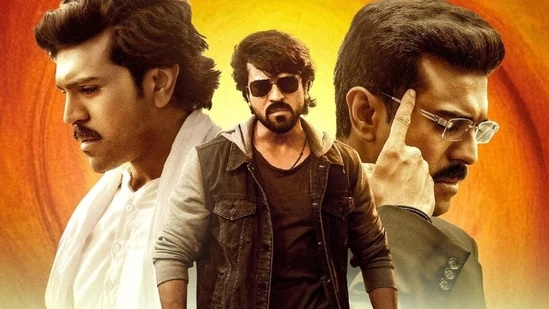
Shankar’s Game Changer, while undoubtedly entertaining, largely adheres to the director’s well-known formula of high-octane action, social commentary, and larger-than-life characters. The film centers around Ram Nandan (played by Ram Charan), an upright IAS officer who battles rampant corruption in Vizag. His journey intersects with Mopidevi (portrayed by Suryah), a ruthless politician determined to seize power. While the narrative is somewhat predictable, it effectively sheds light on the evils of corruption and underscores the significance of ethical leadership.
However, the film struggles with character development. Although Ram Charan delivers a commendable performance, the supporting characters—including Kiara Advani as the romantic interest—feel insufficiently fleshed out. The film leans heavily on familiar Shankar tropes, such as grandiose action sequences and an idealized depiction of the protagonist, which can detract from the overall experience.
Despite these shortcomings, Game Changer stands out for its visual appeal and strong production values. The action sequences are well-executed, maintaining a level of excitement throughout the film, and the energetic music enhances the viewing experience. Additionally, the sub-plot featuring Appanna (Ram Charan in a dual role) and Parvathy (played by Anjali) provides a much-needed emotional core, arguably becoming the most impactful aspect of the narrative.
Audience Review
Early audience reactions to Game Changer are largely positive, with many praising Ram Charan’s screen presence, Shankar’s technical prowess, and the stunning cinematography. However, some viewers have raised concerns about the film’s stale plot and lack of real-world logic.
The first screenings began at 1 am in parts of Telangana and Andhra, with reviews starting to appear on X (formerly Twitter) by 2:30 am around the interval, and a flood of comments by 5 am.Overall, the consensus is that the film is an entertaining watch.
One viewer succinctly stated, “Simply in one word… it’s good. You’ll love it. Game Changer is a clean film you can watch with your family without hesitation.” Another praised the chemistry between Kiara Advani and Ram Charan, noting that the songs and writing were also enjoyable.
The Last Word
Thus, in the end, we can say that Game Changer is a quintessential Shankar film: entertaining yet predictable. While it successfully delivers a vital message against corruption, it ultimately lacks the originality and emotional depth needed to make a lasting impression.